Fish Farm
interventions_0.html
Fish farming, also known as aquaculture, is the practice of raising fish and other aquatic organisms (such as shellfish, crustaceans, and seaweed) in controlled environments. It is one of the fastest-growing methods of food production worldwide, contributing significantly to global fish consumption and reducing pressure on wild fish stocks.
There are 5 main types of Fish Farming:
- Pond Systems: Where Fish are raised in natural or artificial ponds, these are commonly used for such as tilapia, catfish, and carp.
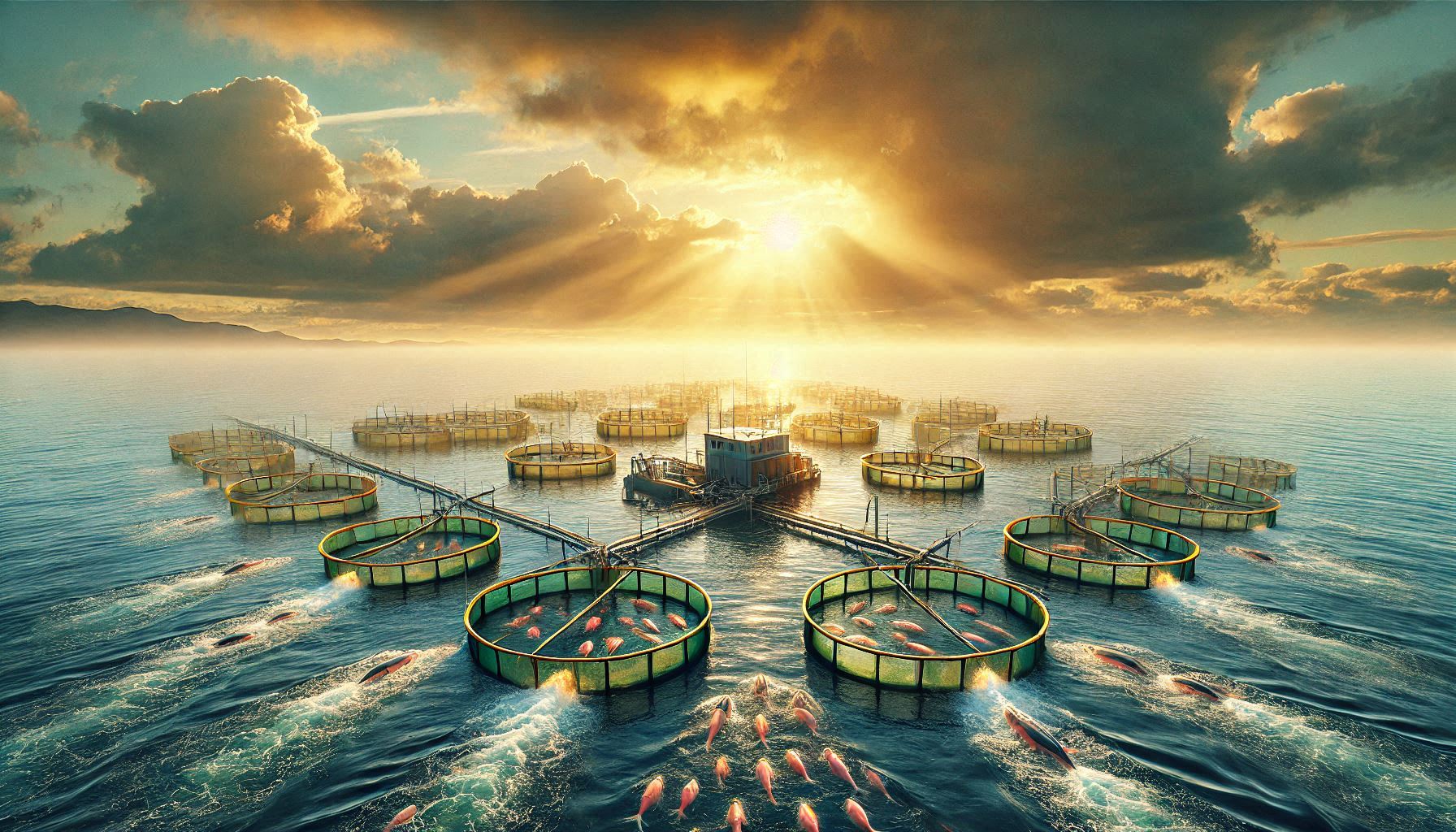
- Cage Farming: Fishes are grown in cages or enclosures within natural water bodies (rivers, lakes, or oceans). These are commonly used for species
such as salmon, sea bass, and trout. - Recirculating Aquaculture Systems (RAS): Is a closed system where water is continuously filtered and recirculated. They are more environmentally
friendly than the first two options, but costly to set up. Species include; Salmon, Shrimp or Ornamental fish. - Integrated Aquaculture: Also known as integrated Multi-Trophic Aquaculture (IMTA). Combines fish farming with other farming activities such aquaponics (growing plants in water i.e. Rice or Seaweed) or shellfish. Where the waste from the fish provides nutrients for the other species to grow, creating a sustainable cycle.
- Open-net Pens: Are floating net enclosures in oceans or lakes, and are often used for large-scale farming like salmon and tuna.
Benefits
- Food Security: Provides a reliable source of protein and nutrition for growing populations
- Reduces Pressure on Wild Stocks: Alleviates overfishing by supplementing fish supply.
- Economic Growth: Creates jobs in rural and coastal communities.
- Efficiency: Fish convert feed to body mass more efficiently than land animals, requiring less feed and water.
- Versatility: Can be adapted to freshwater, brackish, or saltwater environments.
Criticism or Limitations
- Environmental Impact: Excess feed and waste can pollute surrounding water and there is a risk of diseases and parasites spreading to nearby wild fish.
- Overuse of Resources: Dependence on wild-caught fish for fishmeal and fish oil used in feed.
- Invasive Species: Escaped farmed fish can threaten native populations.
- Antibiotics and Chemicals: Overuse can lead to water contamination and antibiotic resistance.
- Ethical Concerns: Crowded conditions can affect fish welfare.